
Two Tone Kitchens Central Coast
A two tone kitchen pairs two cabinetry finishes instead of running one colour through the whole space. It isn’t tied to one look. We build it as a trending style within both our Modern Kitchens range, alongside Coastal and Handleless, and our range, alongside Shaker and Hampton Coastal.
Done well, it looks intentional. Done poorly, it looks like two kitchens pushed together. The difference comes down to a few decisions made early: which surfaces carry which colour, how the tones relate, and whether the cabinetry profile is flat panel or a classic routed door. That applies whether this is a standalone style choice within a custom kitchen build or one part of a full kitchen renovation.
What Makes a Kitchen Two Tone
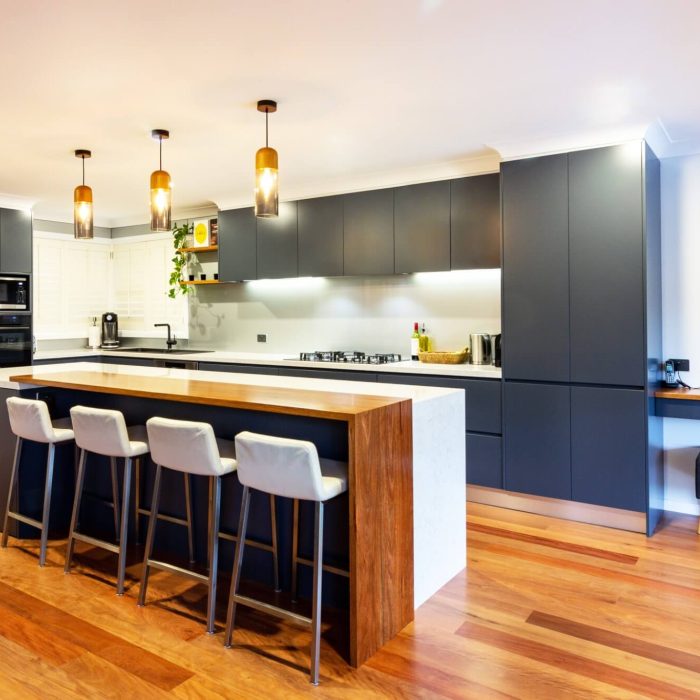
Two tone kitchens combine complementary cabinetry colours, whether that’s light and dark finishes or timber paired with painted surfaces, to add depth and definition while keeping the design balanced rather than busy.
The most common version splits the kitchen by height: a lighter finish on the upper cabinetry, a darker or bolder tone on the base. It works because it mirrors how the eye reads a room, with light drawing the space up and dark grounding it. But height isn’t the only way to split a two tone kitchen, and for a lot of Central Coast homes it isn’t the best one.
A common mistake: choosing the two colours before the layout. It works better the other way around. Where your island sits and how much wall cabinetry you’ve got usually points to the right split before colour comes into it.
Why choose two tone over a single colour? An all-white or single-finish kitchen is lower risk and easier to keep consistent over time, but it can read as flat in a large, open kitchen with a lot of cabinetry. Two tone breaks up a big run of cabinetry and gives the eye somewhere to land, without needing bold colour across the whole room.
Two Tone in a Modern or Traditional Kitchen
The colour-blocking principle stays the same either way. What changes is the cabinetry profile underneath it, and that’s what actually determines how the finished kitchen reads.
Modern Two Tone
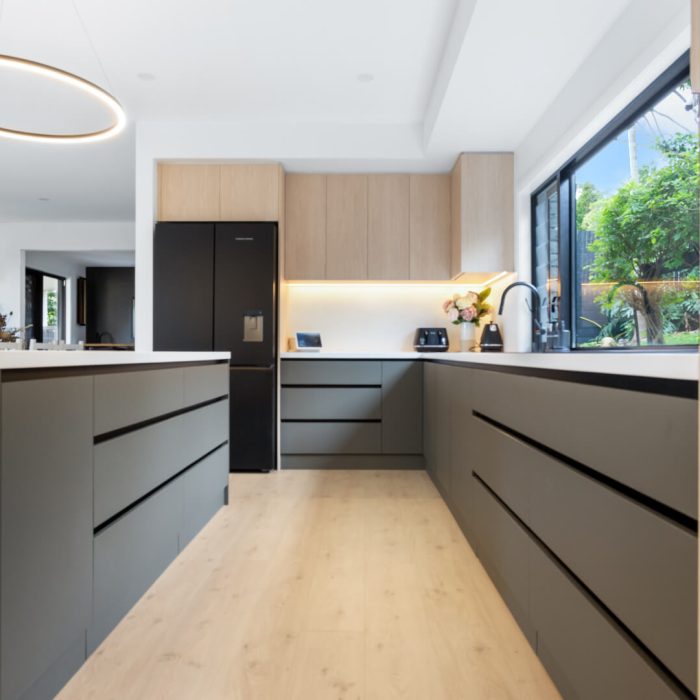
Uses flat panel cabinetry with a handleless or minimalist handle finish, sometimes paired with Sharknose profiles or Milan aluminium rails. The two tones sit against clean, unbroken lines, so the contrast itself does most of the visual work.
Traditional Two Tone
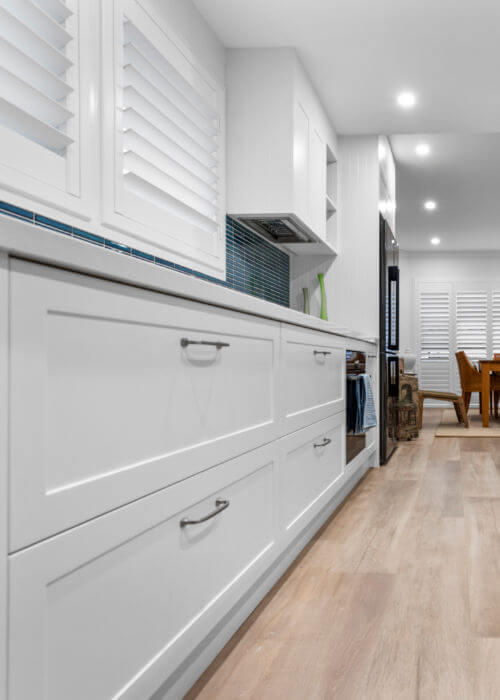
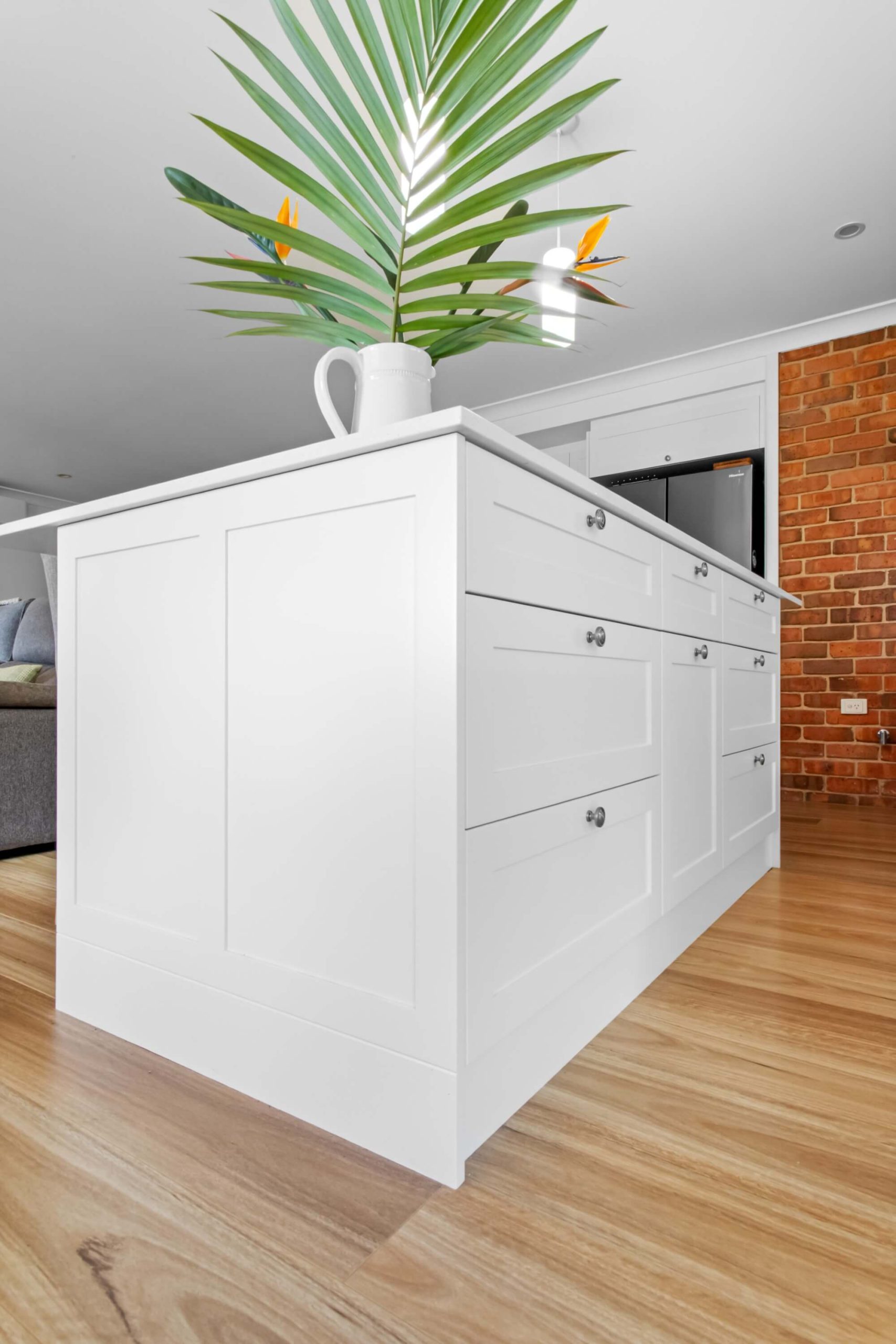
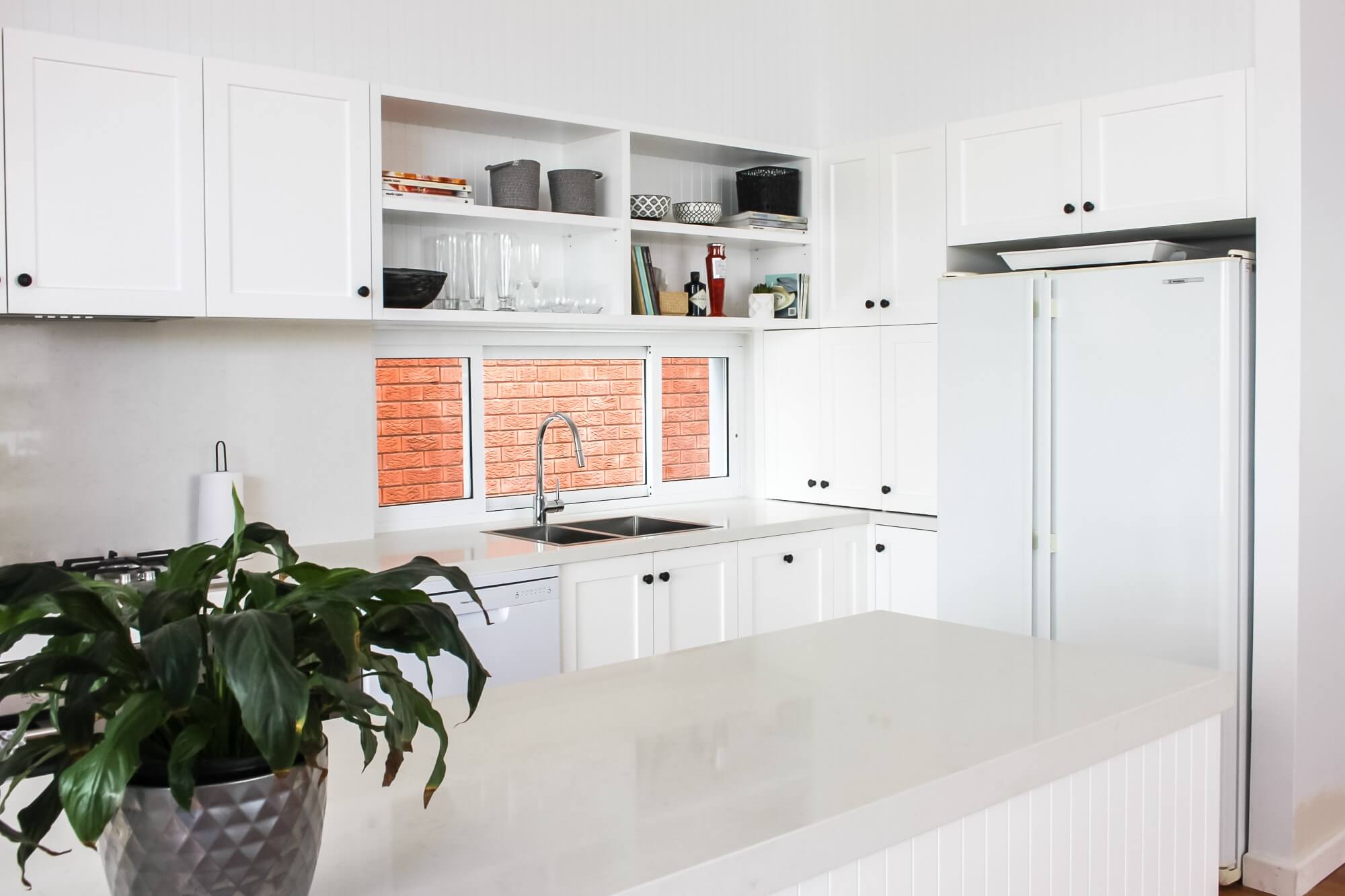
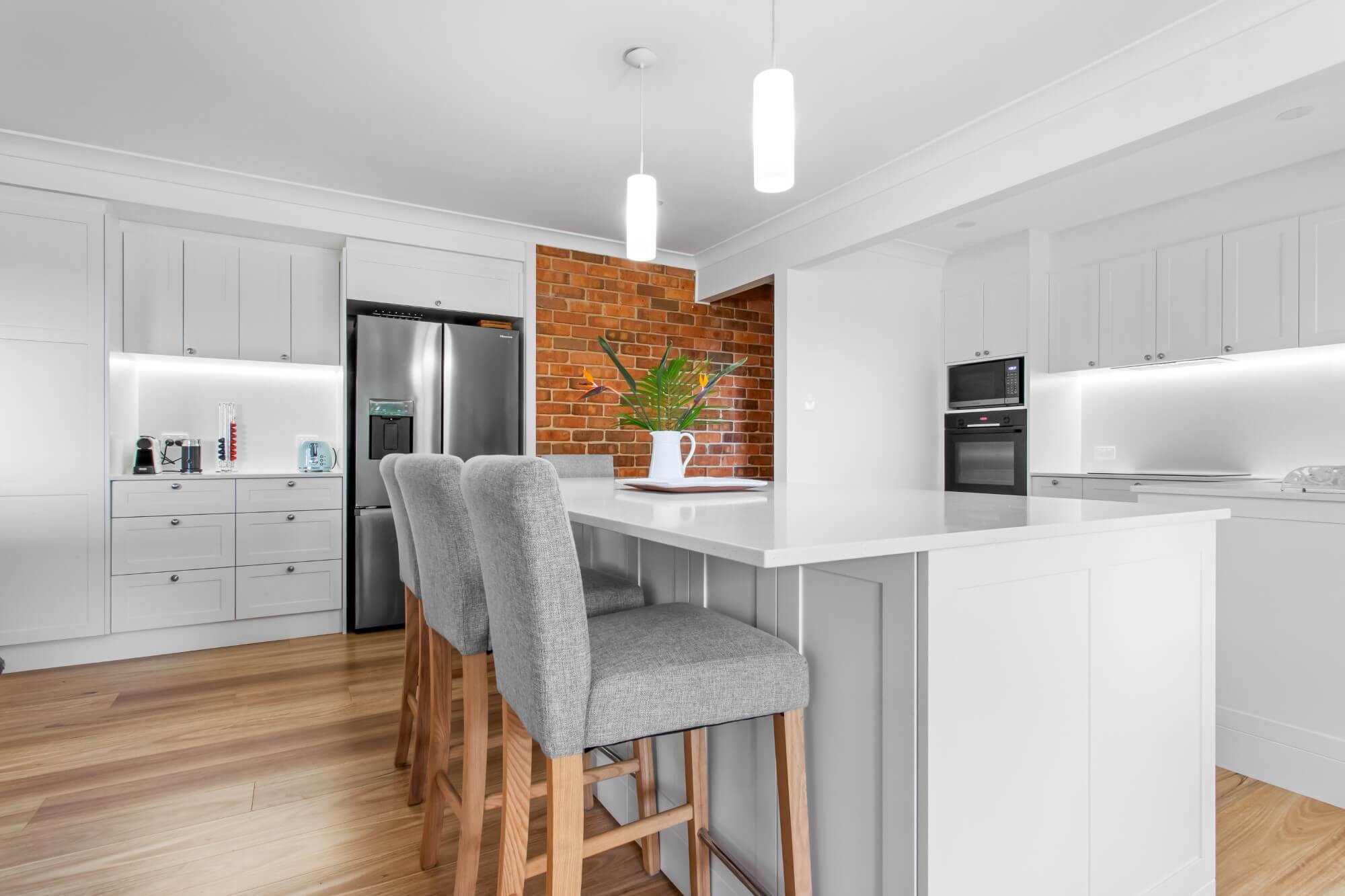
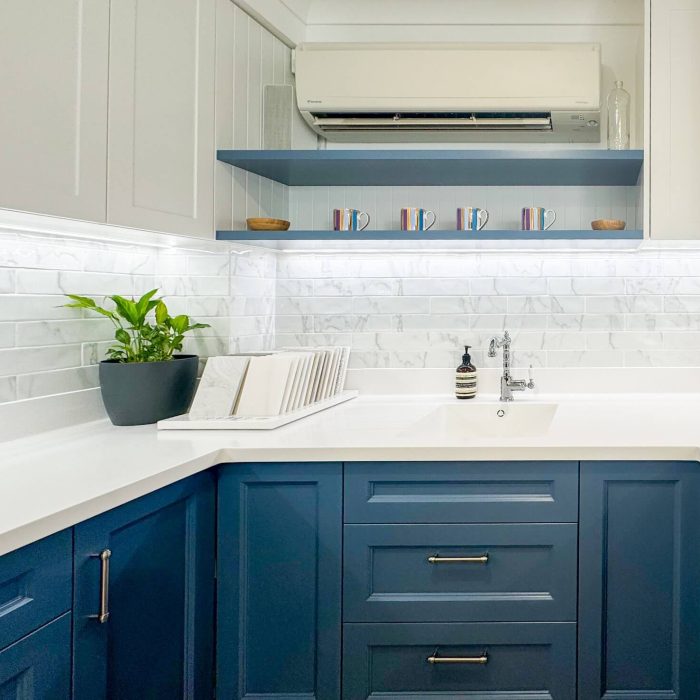
Uses Shaker or V-groove routed door profiles, with the detailing and mouldings already adding depth before colour is introduced. Hardware is typically knobs, cup pulls or classic handles rather than handleless. The two tones sit alongside that existing structure rather than replacing it, which is why it reads as “layered” rather than “contrasted.”
Where the Contrast Goes
Three layouts come up most often, each putting the contrast in a different place:

Uppers and lowers
Light or neutral cabinets on top keep the room feeling open, useful in kitchens with lower ceilings or less natural light, while a darker or bolder base grounds the space. This is the layout most people picture when they think "two tone kitchen" and it suits almost any kitchen size
Island contrast
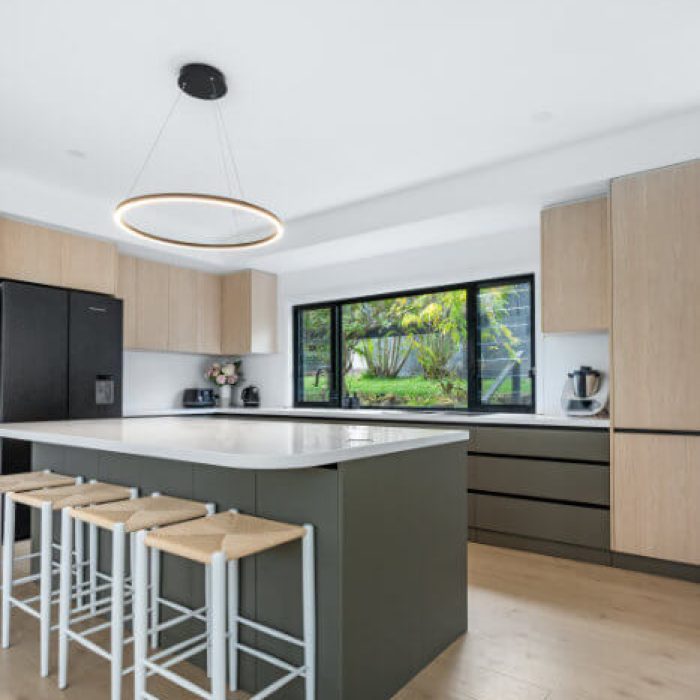
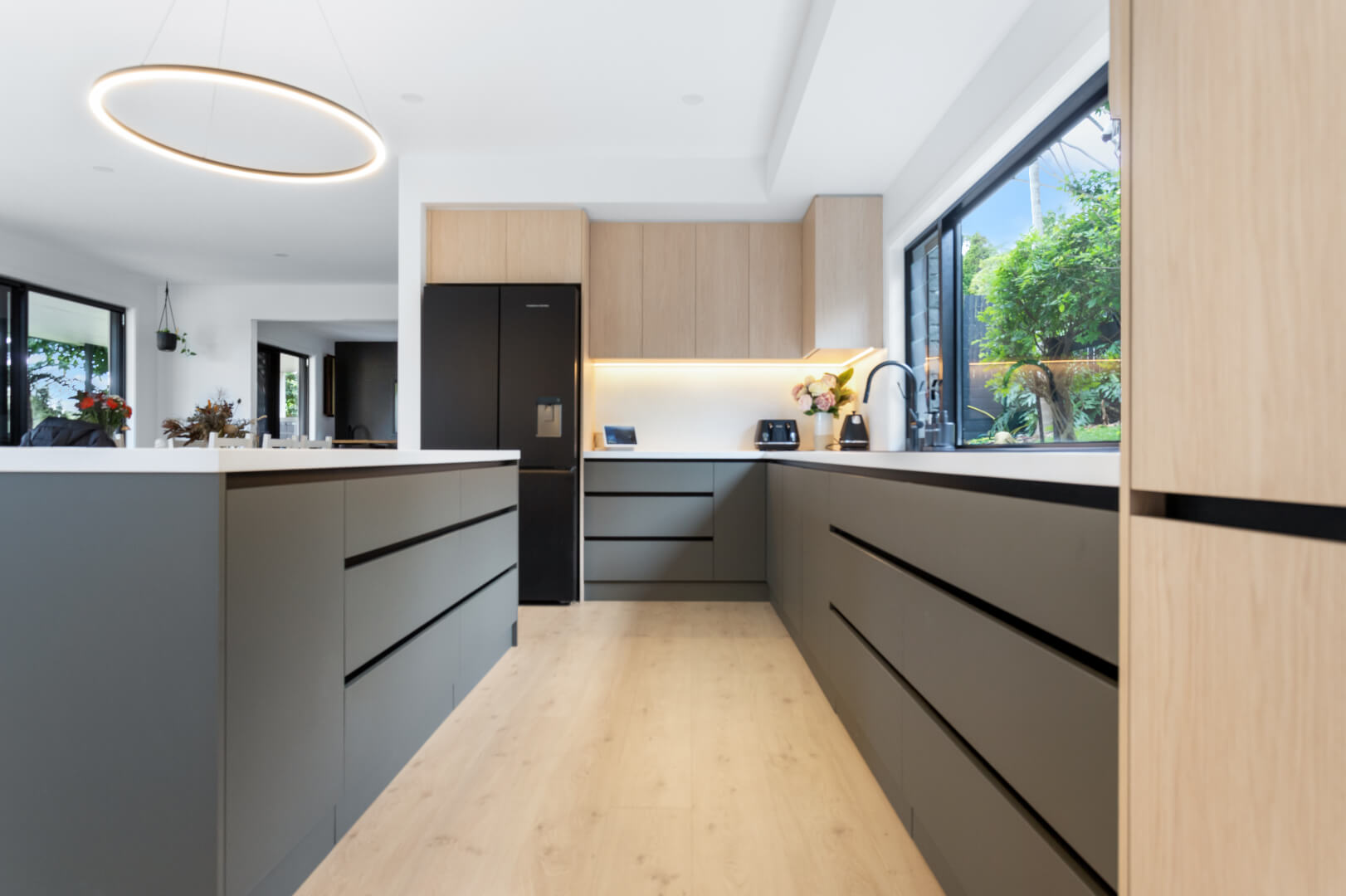
The one we're building more of on the Central Coast right now, especially in open-plan homes where the island is the visual centrepiece. Perimeter cabinetry, benchtop to ceiling, stays one finish; the island stands apart in a contrasting paint or timber-look tone. Suits larger kitchens where the island genuinely reads as a separate piece.
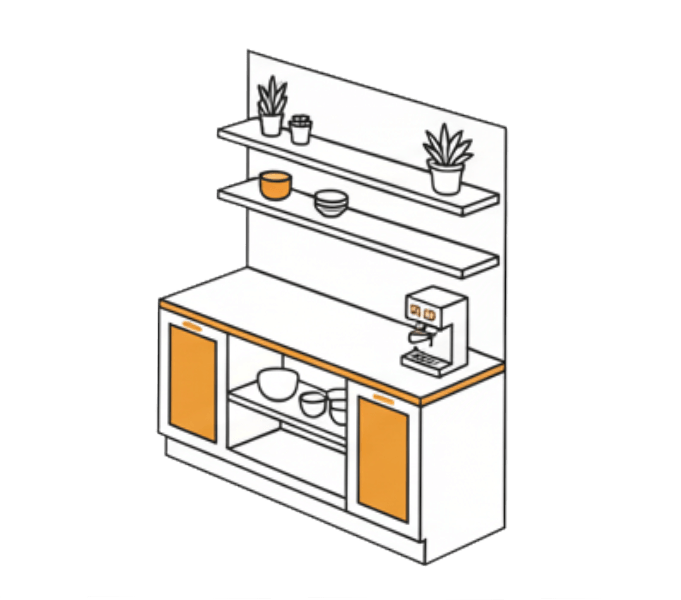
Tall Bank Split
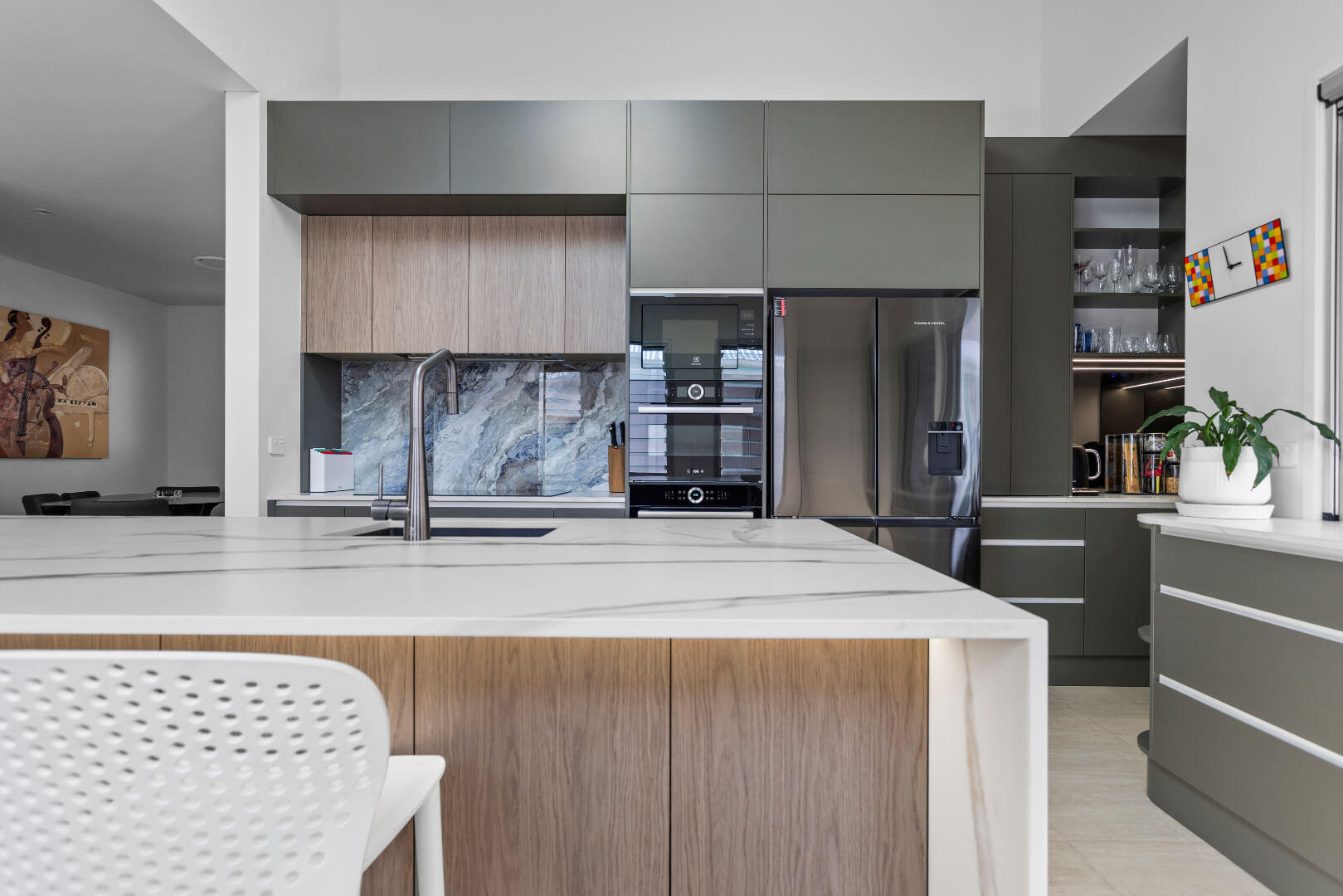
Full-height pantry or fridge cabinetry stays in one finish while the main base and overhead run uses a second tone. A practical, understated option where the tall cabinetry naturally sits apart from the main workspace.
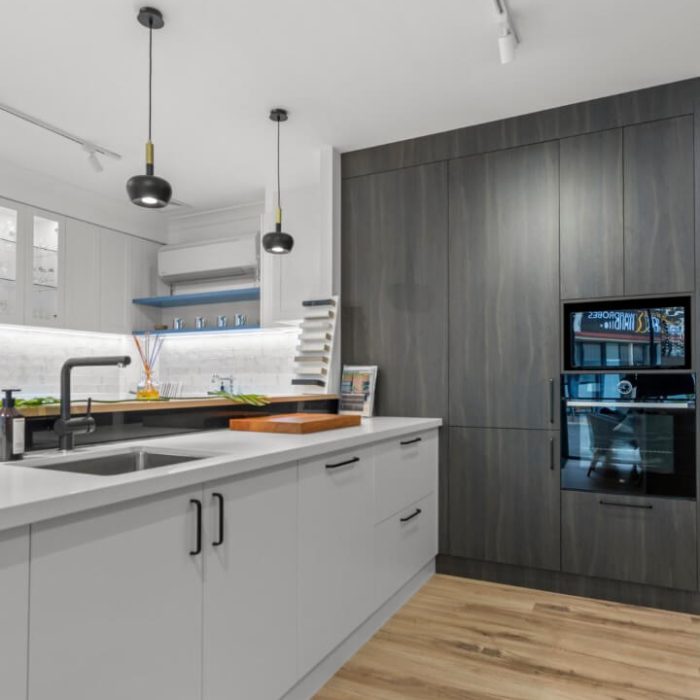
Which one suits your kitchen comes down to layout and how open the space is to the rest of the home. We’ll usually have a clear recommendation after seeing the floor plan, before colour is even discussed.
Colour and Finish Combinations We work with
Classic contrast
Creamy off-white or alabaster upper, deep navy or matte black lower in polyurethane. The safest option for resale and longevity, and it photographs well. Works equally well on flat panel or Shaker doors.
Earthy and natural
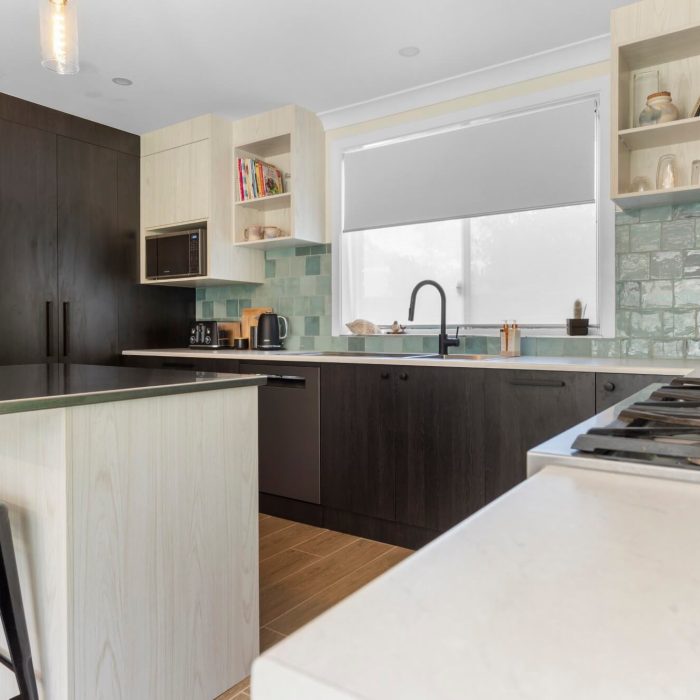
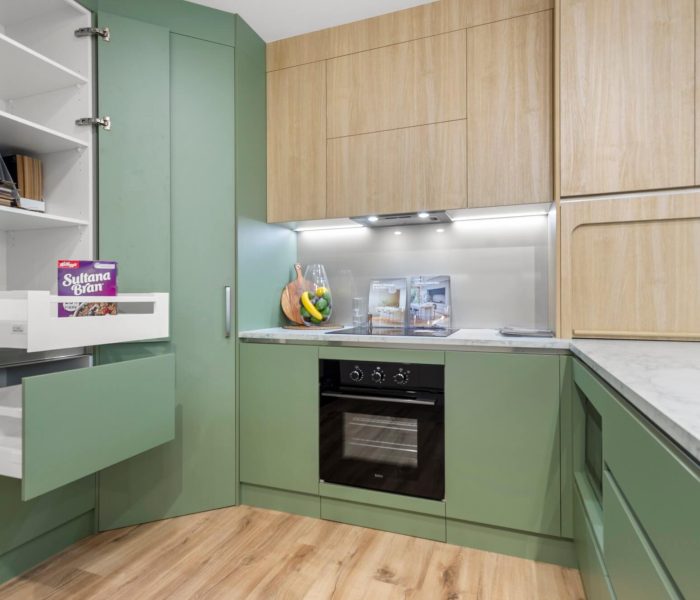
Soft sage or muted teal alongside white oak timber-look laminate. Suits coastal-style homes and softens what could otherwise feel like a stark all-white kitchen.
Warm wood and paint
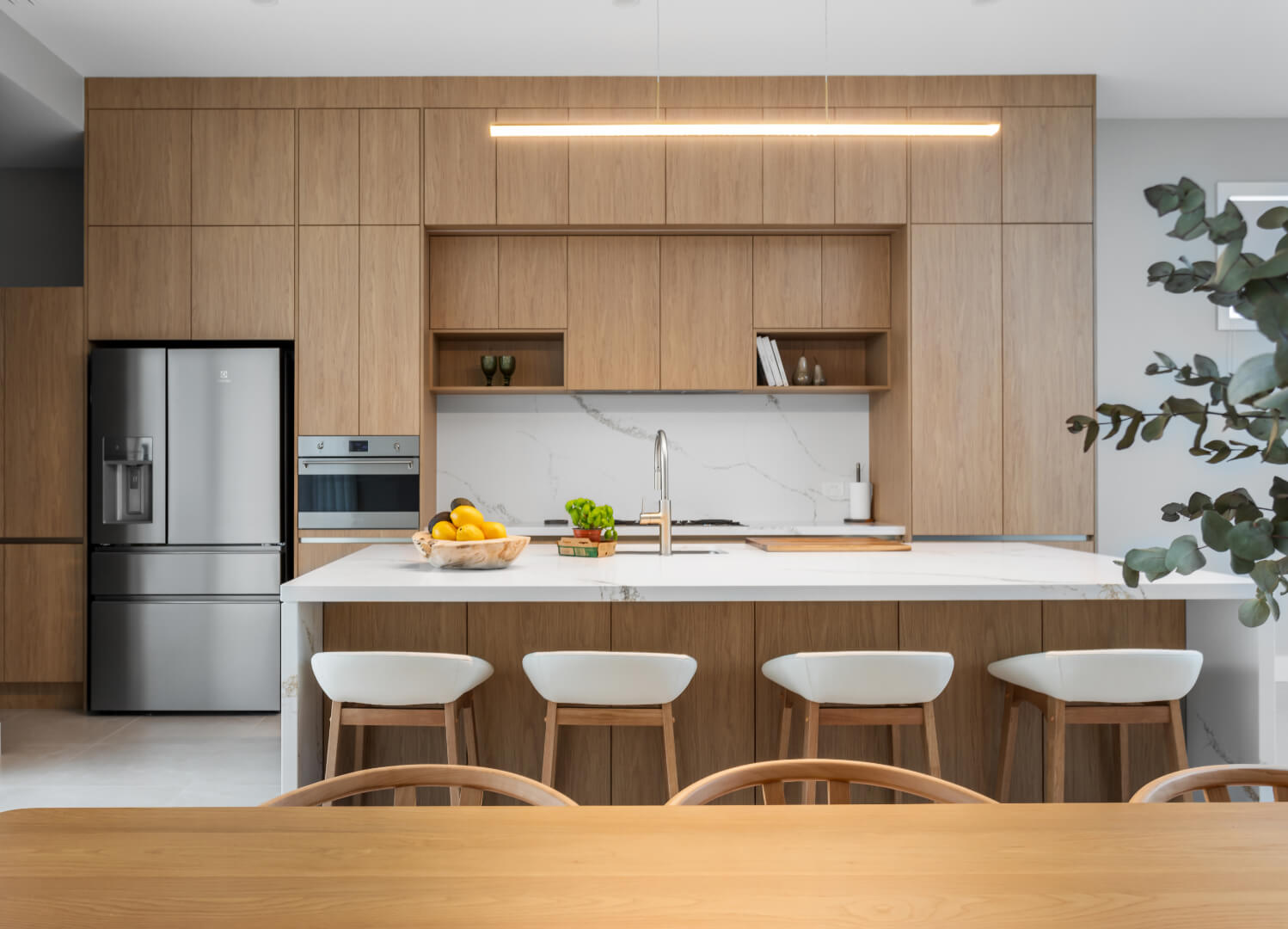
Timber-look grain (walnut or white oak) against charcoal, dark grey or plain white polyurethane. The combination we recommend most for island contrast, since the timber grain reads as a material shift rather than just a colour change.
Match your Undertones
A warm timber against a cool-toned grey can clash in ways that only show up once the cabinetry is installed. Keep both tones either warm or cool throughout.
Wear matters too
Polyurethane gives the smoothest, most consistent colour but shows fingerprints and knocks more readily, so it suits upper cabinetry or an island end panel better than a base run next to the sink. Laminate, including timber-look ranges, is more forgiving day to day, which is why it’s common for lower cabinetry.
Getting the Balance Right
Aim for roughly 70/30, lighter or neutral tone against the bolder accent. Push much past that and the kitchen starts to feel heavy rather than contrasted.
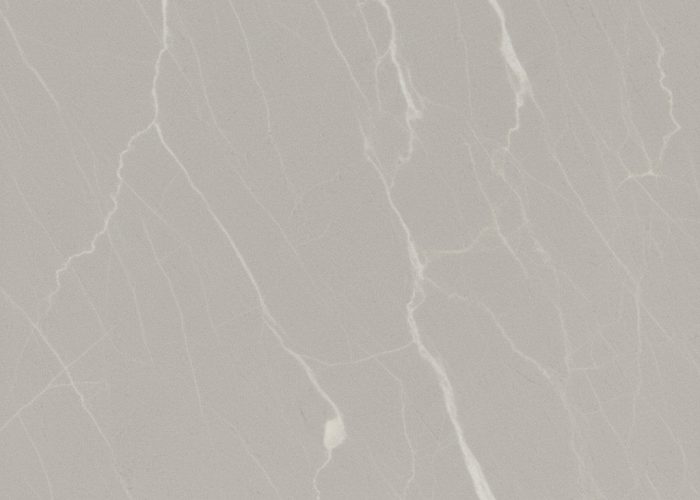
Tie it together with the benchtop. A stone or Corian benchtop with subtle veining, run consistently across both cabinetry zones, stops the kitchen reading as two separate colour blocks. We generally finalise the benchtop and splashback after the cabinetry tones are chosen, not before, since it’s easier to match a benchtop to two colours than the reverse.
Keep hardware consistent. For a modern two tone kitchen, Sharknose profiles or Milan aluminium rails in one finish across both tones keep it feeling like a single design. For a traditional two tone kitchen, knobs or classic handles in one finish do the same job, tying the two cabinetry colours back to a shared style.
What Two Tone Adds to the Budget
Two tone doesn’t have to cost significantly more than a single colour kitchen, but a few things move the number:
- Polyurethane costs more than laminate per cabinet, so heavy use of polyurethane across both tones sits higher than a laminate and polyurethane pairing.
- Island contrast layouts add a little more, since the island becomes its own colour run rather than matching the perimeter.
- The most cost-effective way to get a genuine two tone look is usually laminate paired with polyurethane on an uppers-and-lowers split, using each finish where it’s naturally suited.
Kitchen size and configuration affect the total as much as the finishes do, so we’ll give you an accurate figure as part of a measure and quote.
Seeing It Before You Commit
Two tone finishes are hard to judge from a sample chip or a photo. A navy that looks striking as a small swatch can read almost black across a full run of base cabinetry, and a timber-look laminate that photographs warm can look different under the actual light in your kitchen.
Our showroom at West Gosford has full kitchen displays set up with these combinations at real scale, along with the benchtops, splashbacks and hardware that go with them.
Every kitchen we build, including two tone designs, is manufactured in-house at our West Gosford factory and made to the measurements of your space. For benchtop templating and trades like plumbing and electrical, we coordinate the scheduling and provide the plans, but you deal with the fabricator and tradespeople directly. It keeps the process transparent and avoids the markup that comes with a fully project-managed renovation.
Kitchen Process
From the initial consultation through to installation, our kitchen renovation process is designed to give you confidence at every stage. We take the time to understand your needs, discuss your ideas, and create a design that is tailored to your home, lifestyle, and budget.
With clear communication, quality craftsmanship, and attention to detail throughout the project, we work closely with you to ensure the finished result not only looks great but functions seamlessly for everyday living. Here’s what you can expect when you choose Central Coast Kitchens & Wardrobes for your kitchen renovation.

Consultation
We listen, measure, and talk through your space to understand how you want it to work.

Design
We create a tailored design that balances layout, storage, and style to suit your home.

Manufacture
Cabinetry is made to measure in our factory using quality materials and construction methods.
Installation
Our experienced team installs your cabinetry with care, precision, and attention to detail.
Kitchen FAQs
Choosing a kitchen is easier when you can see materials, finishes and design options in person. Visit our showroom to explore ideas and make decisions with confidence.
What is a two tone kitchen?
Two different cabinetry colours or finishes across the space, most commonly split between upper and lower cabinetry, rather than one colour running throughout.
What colours work well together in a two tone kitchen?
Combinations with a shared undertone, either both warm or both cool. Popular pairings: off-white with navy or black, sage or teal with white oak, natural timber-look grain with charcoal or dark grey.
Does a two tone kitchen suit a small kitchen?
Yes, if the contrast is placed carefully. A lighter upper with a darker lower still works well, since the lighter tone above eye level keeps the room feeling open. Island contrast usually needs a reasonably sized island to work.
Can I mix timber and painted cabinetry in a two tone design?
Yes, and it’s one of our more popular combinations. Timber-look laminate paired with a polyurethane painted finish gives a material contrast, not just a colour one, which tends to look more considered than two painted tones alone.
How much does a two tone kitchen cost?
It depends on the finishes and layout. Laminate paired with polyurethane on an uppers-and-lowers split is generally the most cost-effective way to achieve the look. We’ll provide an accurate figure once we know your kitchen’s size, layout and finish preferences.
Can I get a two tone kitchen in a traditional style, not just modern?
Yes. Two tone is a trending style within both our Modern Kitchens and Traditional Kitchens ranges. The colour-blocking approach is the same, but a traditional two tone kitchen uses Shaker or V-groove routed cabinetry with classic hardware, rather than flat panel doors and handleless profiles.
Talk to us about your two tone kitchen
If a two tone kitchen is the direction you’re leaning towards, the best next step is seeing the finishes in person and talking through which layout suits your space. Most showroom visits take around 30 minutes, no obligation to commit on the day.